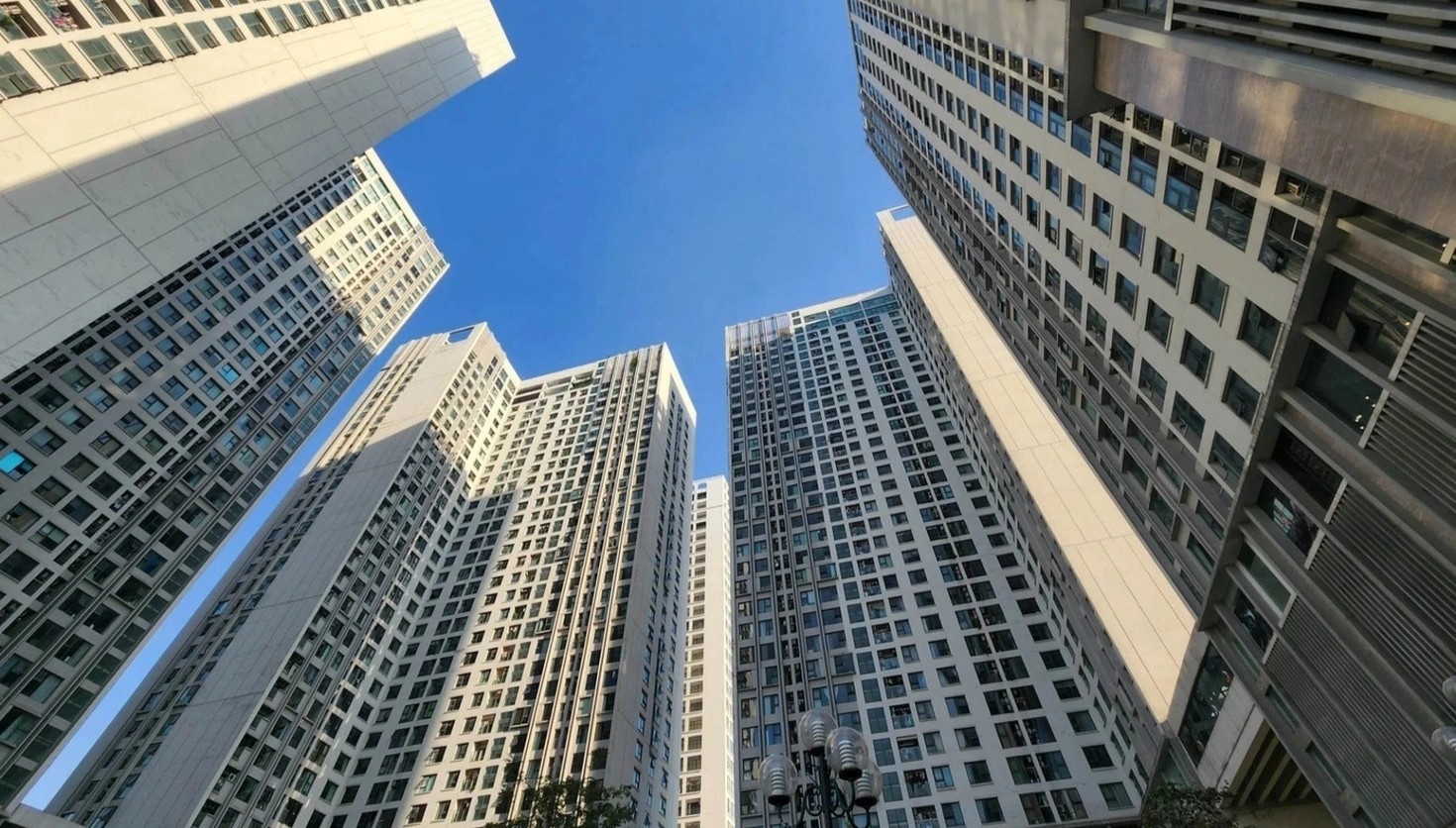
Insights | What the Withdrawal of the Term-Limited Apartment Ownership Proposal Tells Us
25, August, 2026
Author: Tuan Pham
(Ngo & Partners is pleased to share the article "What the Withdrawal of the Term-Limited Apartment Ownership Proposal Tells Us" by Tuan Pham, LL.M., Of Counsel at Ngo & Partners, originally published in Dan Tri News, 18 July 2026.)
The Ministry of Construction has announced that the proposal to introduce term-limited ownership of apartments has been removed from the draft revised Law on Housing, following consultation with experts, associations and the public.
In the earlier draft, the Ministry had proposed that ownership of an apartment would end when the building reached the end of its service life, or fell within the category of mandatory demolition under law.
When the Ministry decided to withdraw the proposal, many assumed the debate was over.
Perhaps not.
Behind a withdrawn proposal, a question worth pondering remains: did the chosen solution actually start from where the problem is stuck?
At first glance, this is a story about old, deteriorating apartment buildings. One of the proposal's objectives was to break the years-long deadlock in renovating and rebuilding them. Look closer, though, and something rather striking appears. The first people affected by the proposal would seemingly not be the residents of old apartment blocks. They would be the people preparing to buy a new apartment.
And here lies a paradox worth thinking about.
Under the option once tabled, when a building reached the end of its service life, the competent authority would inspect it. If still safe, it would continue in use; if no longer safe, it would be demolished and ownership of the apartments would end. Compared with earlier options, this approach was more flexible: ownership would not terminate automatically upon the design life, but would depend on the building's actual condition.
Which is precisely what prompts a question: if the building remains safe and ownership continues, what management tool would the shift from indefinite to term-limited ownership add that the current mechanism lacks?
That is perhaps the question that needs answering before changing the ownership regime.
No one disputes that renovating old apartment buildings is urgent. Thousands of households still live in deteriorated structures, while many renovation projects have dragged on for decades without breaking ground.
But looking at the stalled projects, what slows them down does not appear to be the duration of ownership. The hardest part is finding the meeting point between the interests of residents, developers and the State. Residents need fair compensation. Developers need projects viable enough to invest in. Authorities must safeguard planning, infrastructure and urban carrying capacity. Until those three interests meet, old apartment blocks will remain very hard to rebuild. In other words, the bottleneck lies in the renovation mechanism — not in the age of ownership rights.
That is why it is troubling that the proposed solution leaned towards future apartment buyers, when the problem to be solved sits in the apartment blocks that are already old.
Old apartment buildings are today's problem. New apartment buyers are tomorrow's story. Those two stories should not necessarily begin with the same answer.
A policy does not merely change regulations. It changes society's expectations. For many Vietnamese families, an apartment is not just a place to live. It is often the largest asset after years of saving, the collateral for a loan, and the asset parents hope to leave their children. People do not simply buy an apartment. They buy peace of mind for decades to come. An apartment may be built of concrete and steel. But the decision to buy a home is always built on trust.
So the moment further questions arise — by what criteria will ownership be extended, and for how long; how will an apartment's value change as the building ages; how will heirs' rights be protected — uncertainty has already crept in at the very moment of the purchase decision.
Some costs appear not on the price list, but in the buyer's hesitation.
For policies that touch directly on the property rights of millions, every element of uncertainty must be weighed with the utmost care. That is perhaps why the Ministry's decision not to proceed with this option reflects the caution that policy-making requires.
Withdrawing a proposal, however, does not mean the problem of old apartment renovation has been solved.
In fact, other approaches have recently emerged. Resolution No. 66/2026 dated 15 June 2026 of the Hanoi People's Council, for instance, provides additional tools for inspection, demolition, redevelopment, developer selection, compensation and resettlement — without altering the nature of residents' ownership rights.
It shows there remain many ways to clear the bottleneck of old apartment renovation that need not begin with changing the ownership regime.
A sound policy must do more than aim at the right objective. More importantly, it must act on the place where things are actually stuck.
In the end, the answer for old apartment buildings should begin in the old apartment buildings themselves — not in the anxieties of those preparing to buy a new one.